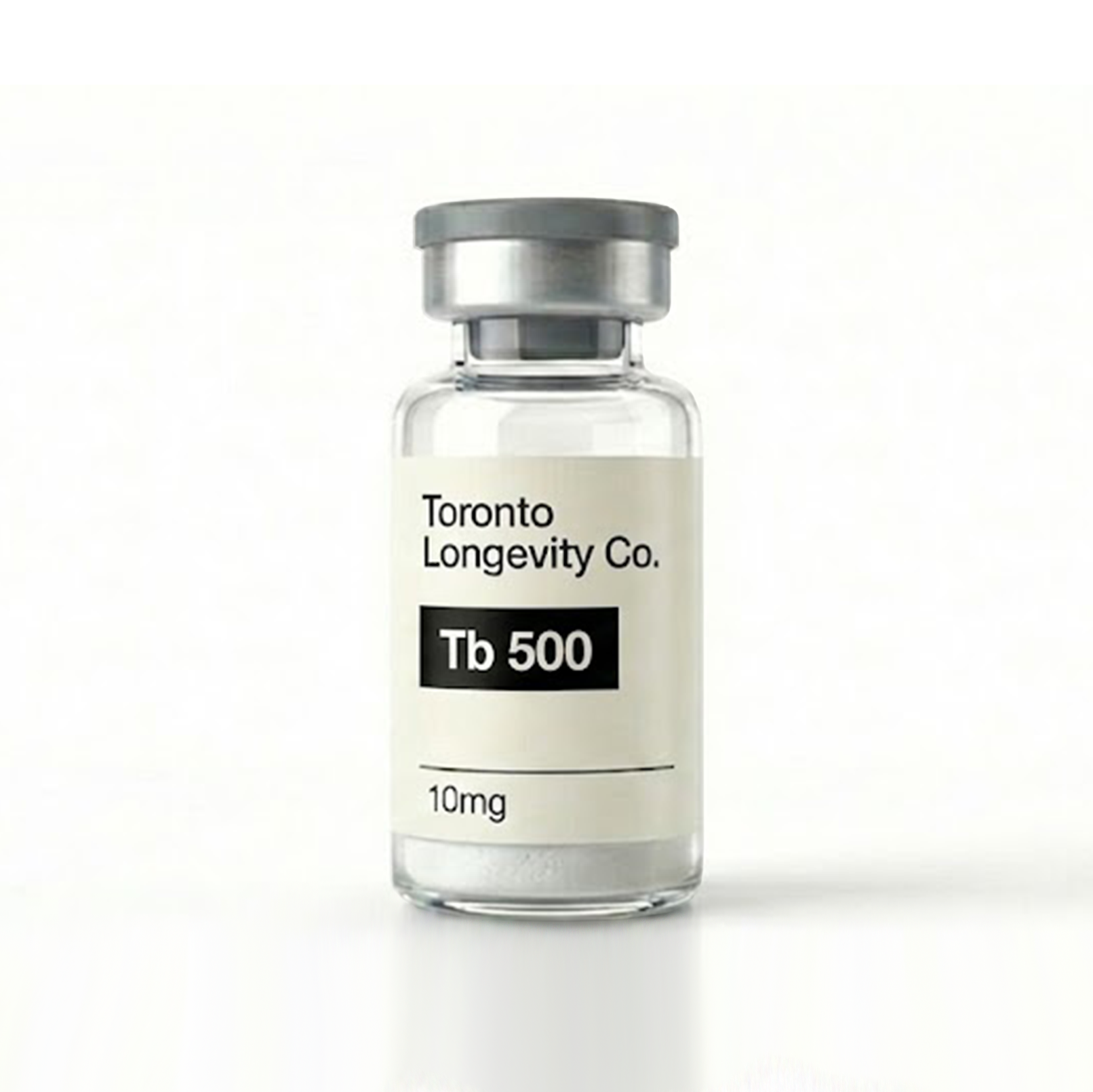
RESEARCH PEPTIDE • LABORATORY USE ONLY
TB-500
Thymosin Beta-4 Fragment
$169
FOR RESEARCH USE ONLY. This product is intended for laboratory and research applications only. Not for human consumption, clinical, diagnostic, or therapeutic use. Purchaser assumes all liability.
Research Overview
TB-500 is a synthetic peptide based on the active region of Thymosin Beta-4, a naturally occurring 43-amino acid protein. This research compound has been extensively studied in laboratory settings for its role in actin binding and cellular migration dynamics.
Thymosin Beta-4, the parent molecule, is released by platelets and various cell types in response to injury in preclinical models. TB-500 represents a key sequence fragment that has been isolated for research into tissue repair mechanisms and cellular signaling cascades.
Research Applications
Actin Dynamics Studies
Laboratory research focuses on TB-500's high-affinity binding to monomeric G-actin, a critical aspect of cytoskeletal reorganization and cell motility in vitro.
Tissue Repair Models
Preclinical studies investigate cellular migration, extracellular matrix remodeling, and wound closure kinetics in controlled research environments.
Inflammation Research
In vitro models explore anti-inflammatory signaling pathways and cytokine regulation mechanisms in various cell culture systems.
Connective Tissue Studies
Research models examine tendon, ligament, and muscle tissue responses with particular focus on fibrosis modulation and structural protein synthesis.
Specifications
Storage & Handling
Store lyophilized peptide at -20°C protected from light and moisture. Reconstituted solutions should be stored at 2-8°C for short-term use (up to 7 days) or aliquoted and frozen at -20°C to -80°C for extended storage.
Use sterile technique when reconstituting. Bacteriostatic water or PBS buffer is recommended for reconstitution depending on your experimental protocol. Avoid vortexing; gentle swirling is preferred.
Selected References
1. Goldstein AL, et al. "Thymosin β4: a multi-functional regenerative peptide. Basic properties and clinical applications." Expert Opin Biol Ther. 2012;12(1):37-51.
2. Philp D, et al. "Thymosin β4 promotes hemangiosarcoma formation in the mouse with implications for wound healing." Lab Invest. 2006;86(11):1117-1127.
3. Sosne G, et al. "Thymosin beta 4: A potential novel therapy for neurotrophic keratopathy, dry eye, and ocular inflammatory disorders." Ann N Y Acad Sci. 2012;1270:45-50.