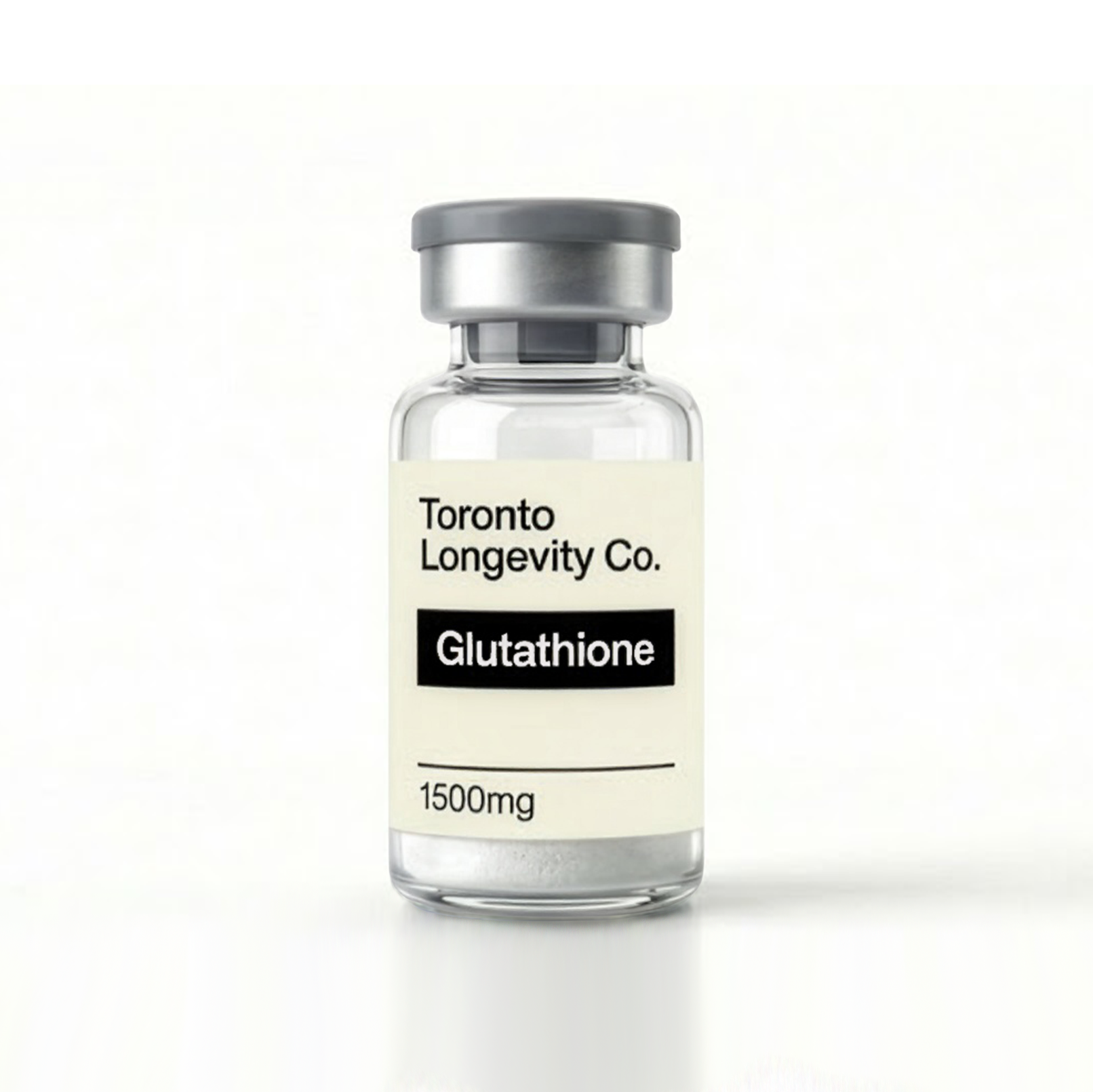
RESEARCH PEPTIDE • LABORATORY USE ONLY
Glutathione
Master Antioxidant Tripeptide
$79
FOR RESEARCH USE ONLY. This product is intended for laboratory and research applications only. Not for human consumption, clinical, diagnostic, or therapeutic use. Purchaser assumes all liability.
Research Overview
Glutathione (GSH) is an endogenous tripeptide composed of three amino acids: glutamic acid, cysteine, and glycine. Often referred to as the "master antioxidant," this research compound is one of the most abundant intracellular antioxidants and plays critical roles in cellular redox homeostasis and detoxification pathways.
Present in virtually all cells, glutathione exists in both reduced (GSH) and oxidized (GSSG) forms. The GSH/GSSG ratio serves as a key indicator of cellular oxidative stress in research models and is extensively studied in biochemistry, toxicology, and cellular biology laboratories.
Research Applications
Oxidative Stress Studies
Laboratory research examines glutathione's role as a primary defense against reactive oxygen species (ROS) and its function in maintaining cellular redox balance in various experimental models.
Detoxification Research
In vitro studies investigate glutathione conjugation reactions catalyzed by glutathione S-transferases (GSTs) for xenobiotic metabolism and heavy metal detoxification pathways.
Cellular Protection Models
Research models explore glutathione's protective mechanisms against oxidative damage to proteins, lipids, and DNA in controlled laboratory environments.
Immune Function Studies
Preclinical research examines glutathione's role in lymphocyte proliferation, natural killer cell activity, and cytokine production in immunology research protocols.
Specifications
Storage & Handling
Store lyophilized glutathione at -20°C in a dry, dark environment protected from oxidation. The reduced form (GSH) is oxygen-sensitive and should be handled under inert atmosphere when possible for research applications requiring maximum stability.
Reconstitute with degassed, sterile water or appropriate buffer at pH 5-7 immediately before use. Glutathione solutions are susceptible to oxidation; prepare fresh solutions for each experiment or store under argon/nitrogen at -80°C if necessary.
Selected References
1. Lu SC. "Glutathione synthesis." Biochim Biophys Acta. 2013;1830(5):3143-3153.
2. Forman HJ, Zhang H, Rinna A. "Glutathione: overview of its protective roles, measurement, and biosynthesis." Mol Aspects Med. 2009;30(1-2):1-12.
3. Meister A, Anderson ME. "Glutathione." Annu Rev Biochem. 1983;52:711-760.