RESEARCH PEPTIDE • LABORATORY USE ONLY
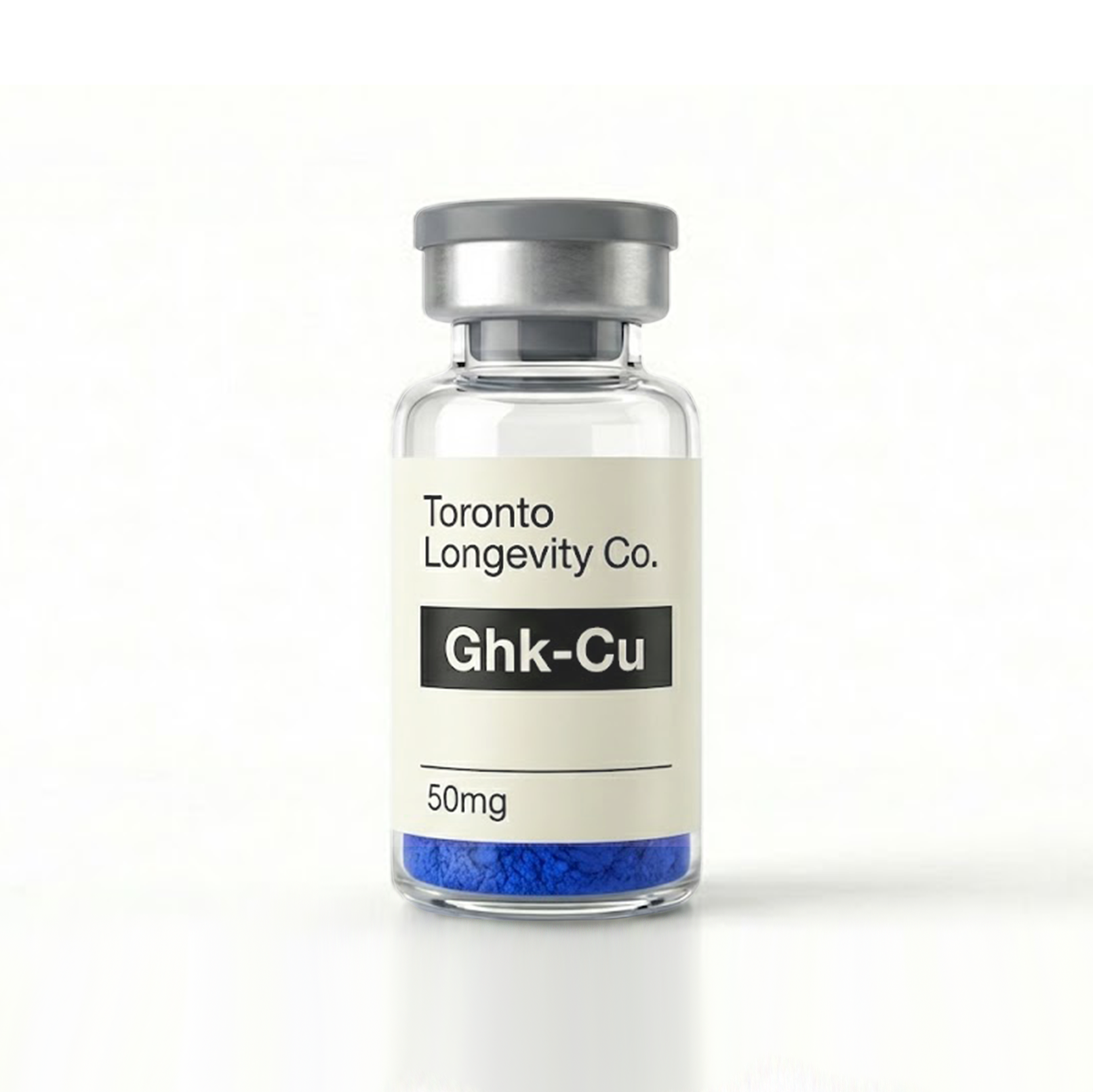
GHK-Cu
Copper Peptide Complex
$89
FOR RESEARCH USE ONLY. This product is intended for laboratory and research applications only. Not for human consumption, clinical, diagnostic, or therapeutic use. Purchaser assumes all liability.
Research Overview
GHK-Cu is a naturally occurring tripeptide-copper complex composed of glycyl-L-histidyl-L-lysine bound to copper(II). This research compound has been extensively studied since the 1970s for its role in cellular signaling, gene expression modulation, and extracellular matrix remodeling.
Plasma concentrations of GHK-Cu decline with age in human studies, decreasing from approximately 200 ng/mL at age 20 to 80 ng/mL by age 60. This age-related decline has made it a subject of interest in regenerative biology and cellular aging research.
Research Applications
Dermal Research Models
Laboratory studies examine GHK-Cu's effects on collagen synthesis, elastin production, and dermal fibroblast proliferation in tissue culture systems.
Gene Expression Studies
Research demonstrates GHK-Cu's ability to modulate over 4,000 human genes, resetting aged cell gene expression patterns toward more youthful profiles in vitro.
Wound Healing Models
Preclinical research investigates accelerated wound closure kinetics, with studies showing 30-50% faster healing in controlled experimental settings.
Matrix Remodeling
In vitro models explore metalloproteinase regulation, glycosaminoglycan synthesis, and structural protein organization in extracellular matrix research.
Specifications
Storage & Handling
Store powder form at 4°C in a dry, dark environment. GHK-Cu is relatively stable in powder form but should be protected from oxidation and moisture. Once reconstituted, store solutions at 2-8°C and use within recommended timeframes.
Reconstitute with sterile distilled water, PBS, or appropriate buffer for your research application. The copper complex is sensitive to pH; maintain between pH 5.5-7.5 for optimal stability. Avoid prolonged exposure to light.
Selected References
1. Pickart L, Margolina A. "Regenerative and protective actions of the GHK-Cu peptide in the light of the new gene data." Int J Mol Sci. 2018;19(7):1987.
2. Pickart L, et al. "GHK peptide as a natural modulator of multiple cellular pathways in skin regeneration." Biomed Res Int. 2015;2015:648108.
3. Arul V, et al. "Biochemical profile of GHK-Cu in dermal wound healing." Biomacromolecules. 2005;6(2):1100-1105.