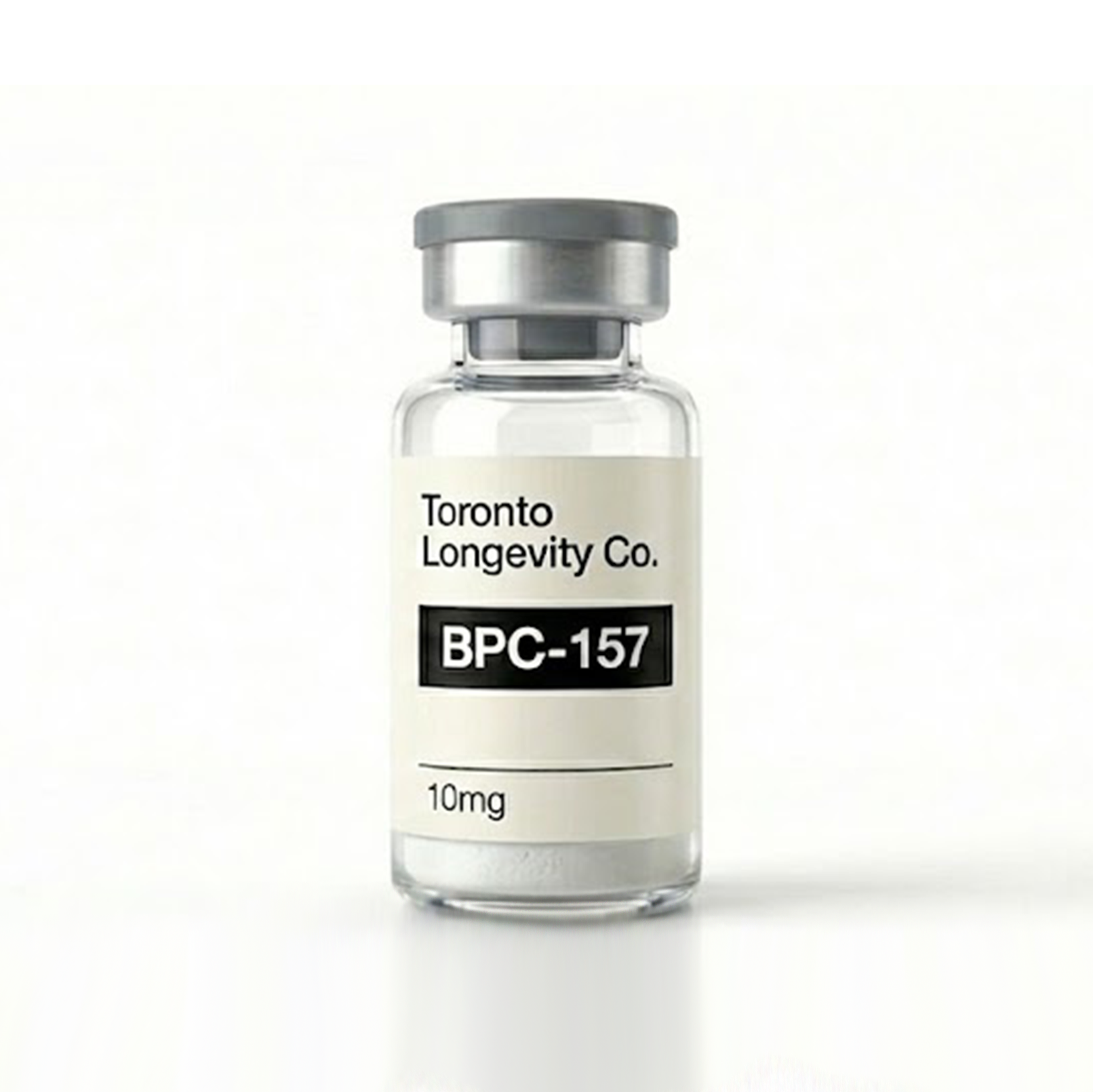
RESEARCH PEPTIDE • LABORATORY USE ONLY
BPC-157
Body Protection Compound 157
$149
FOR RESEARCH USE ONLY. This product is intended for laboratory and research applications only. Not for human consumption, clinical, diagnostic, or therapeutic use. Purchaser assumes all liability.
Research Overview
BPC-157 is a synthetic pentadecapeptide composed of 15 amino acids, derived from a protective protein found in gastric juice. This research compound has been the subject of numerous preclinical studies investigating its potential mechanisms in tissue repair and cellular signaling pathways.
First characterized in 1992, BPC-157 has been studied extensively in laboratory settings for its interaction with various cellular receptors and signaling cascades, particularly the VEGFR2 pathway involved in angiogenesis.
Research Applications
Musculoskeletal Studies
Preclinical research has examined BPC-157's role in tendon, ligament, and muscle tissue models, with particular focus on cellular migration and extracellular matrix remodeling.
Gastrointestinal Models
Laboratory studies have investigated this peptide's interaction with gastric mucosal integrity pathways and epithelial barrier function in controlled research environments.
Angiogenesis Research
In vitro studies demonstrate BPC-157's activation of VEGF receptor 2 signaling, a critical pathway in vascular development and tissue perfusion research.
Cellular Protection
Research models have explored cytoprotective mechanisms and anti-inflammatory signaling pathways in various tissue culture systems.
Specifications
Storage & Handling
Lyophilized peptides should be stored at -20°C in a dry environment. Once reconstituted with bacteriostatic water or appropriate buffer solution, store at 2-8°C and use within the recommended timeframe per your research protocol.
Avoid repeated freeze-thaw cycles. For long-term storage of reconstituted peptide, aliquot into smaller volumes and store at -20°C or -80°C.
Selected References
1. Seiwerth S, et al. "BPC 157's effect on healing." Curr Pharm Des. 2018;24(18):1990-2001.
2. Chang CH, et al. "The promoting effect of pentadecapeptide BPC 157 on tendon healing involves tendon outgrowth, cell survival, and cell migration." J Appl Physiol. 2011;110(3):774-780.
3. Kang EA, et al. "Morphological and functional evidence for angiogenesis in BPC 157 treated tendon fibroblasts." Regul Pept. 2018.